Black entrepreneurs are one of the fastest-growing groups of business owners in Canada, yet their share of venture capital funding has dropped to its lowest level in five years. Advocates warn the widening gap could limit innovation, job creation and long-term economic resilience.
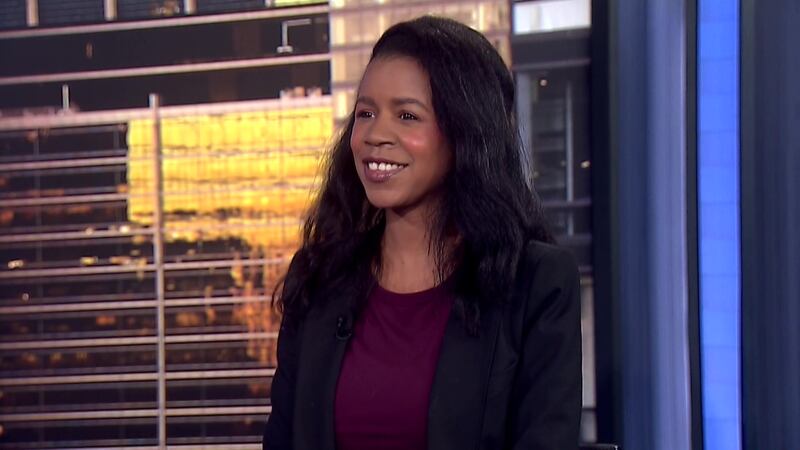
BNN Bloomberg spoke with Melissa Allen, founding partner at Capital M Ventures, about why funding for Black founders has fallen to 0.15 per cent, how economic pressures and DEI rollbacks are contributing, and where new opportunities are emerging.
Key Takeaways
- Black founders received 0.15 per cent of all venture capital funding in Canada in 2025, down from 0.40 per cent in 2024 and 2.27 per cent in 2023, marking a five-year low.
- The rollback of DEI initiatives and tighter economic conditions have contributed to the decline, though broader market uncertainty has also weighed on startup funding.
- The funding gap is estimated at $292 million, limiting job creation, wealth-building and broader economic growth in Canada.
- Despite reduced capital access, Black-led startups continue to perform strongly, with funding levels now described as out of alignment with company performance.
- Cleantech and energy emerged as the largest funded sectors for Black founders in 2025, while representation in AI remains limited despite the sector’s rapid growth.
Read the full transcript below:
ROGER: Black entrepreneurs are among the fastest-growing business owners in Canada, but they receive less than one per cent of all venture capital funding. Recent studies suggest that the funding has fallen even further. Here to give her keen insight on the issue is Melissa Allen, founder of Capital M Ventures. Melissa, thank you very much for joining us. That’s a disturbing number.
MELISSA: Very disturbing. And actually it’s a lot worse than less than one per cent. In 2025, Black founders received actually zero decimal one five per cent of venture capital funding. That’s right, it’s not a decimal error, 0.15.
ROGER: It’s rounding.
MELISSA: That’s a rounding, literally a rounding error, and that’s actually down from 0.40 per cent in 2024. And it’s the lowest it’s been, actually, in the past five years. We saw a high in 2023 of Black founders capturing about 2.27 per cent of all venture capital. And that number has just plummeted with the rollback of DEI.
ROGER: Is that the sole reason for it, that rollback?
MELISSA: I would say that’s not the sole reason. I mean, entrepreneurs across the country are experiencing tighter economic restraints, given the economic climate, the socio-political climate and uncertainty. So that has definitely exacerbated the issue, for sure.
ROGER: Now with those companies and the funding they received, say in 2023 you said it was about 2.27 per cent, which is kind of close to the population.
MELISSA: Exactly.
ROGER: Which is ideal. How did those companies do? Did they see success comparable to every other venture capital-funded group?
MELISSA: Absolutely. I mean, so for example, in 2023, I think that was probably a very frothy market. You could say a lot of companies were getting funded. We were still having low interest rates. It was right before, I would say, the economic pullback, and there was a lot of liquidity in the market that contributed, really, to investing in these founders. And as you were saying, companies were performing extremely well. Everybody was enthusiastic, and the funding was in line with that. And companies still continue to perform quite well. And I would say, even given the economic uncertainty that we’re experiencing today, it’s just that the funding now is just out of alignment with the performance that we’re seeing from these excellent companies.
ROGER: So these companies you’re working with — and so you said the rollback of DEI is hurting. What other issues do you see? Well, aside from tight financial times, what else?
MELISSA: Absolutely. So I see, for example, the wider tech ecosystem, as we call it, the tech industry in Canada and beyond. We see the fact that they need to go out more into different communities where there are larger Black populations and do a lot of outreach when it comes to providing information and making information about venture capital accessible. I mean, Black founders, a lot of them don’t know whether venture capital is right for them, the pros and the cons of it, or even how it works for the business and the implications. So the tech ecosystem could really go out there and start making information more accessible as a start.
ROGER: And is that something also that schools should be doing?
MELISSA: I would say so. I mean, that goes hand in hand with entrepreneurship programs that are popping up in a lot of schools these days. I have participated in many of them. I facilitate a lot of workshops in high schools that teach entrepreneurship, especially when it comes to tech. And one piece that is missing is the funding and the financing. So whether that comes from non-dilutive sources like government credits and grants or venture capital funding, definitely being able to provide that information from an early age up front would go a long way.
ROGER: Yeah, and you focus on Black and women of colour for your funding. How are you doing with that? Are you finding a struggle to find people to help?
MELISSA: Absolutely not. There is so much incredible Black and women of colour talent in the founder and entrepreneurship community. And so at Capital M Ventures, over the past three years, we’ve invested so far into 15 companies, and we’re in the process of investing in two more. Seventy-five per cent of our portfolio are women of colour. About half are Black-led, and they’ve received co-investment also from BDC Capital and other funders such as VKR Capital. So the demand is there in terms of funds looking to invest in these incredible founders, and there is no shortage of excellent, high-quality startups led by Black and women of colour founders.
ROGER: And are there certain fields that they’re stronger in, and some they could use more guidance and help in?
MELISSA: Absolutely. I’ve seen strong representation in the CPG space for women of colour, particularly, I would say, food and cosmetics. But now we’re starting to see that evolve into really getting into the energy space and energy tech and cleantech. In fact, in 2025, the largest segment of Black founders that were getting funding came from cleantech and energy.
ROGER: Really?
MELISSA: Yeah, industry.
ROGER: What’s leading that? What do you think is leading that?
MELISSA: You know, we have a tendency, as I would say, a historically excluded community, to see a lot of problems and have a drive to really solve the bigger problems that impact us, where we’ve been problem solvers in our community since the beginning of time, right, having to deal with a lot of systemic racism and barriers. So we often see the bigger picture and have the propensity to want to help contribute to society as a whole. And so I think that’s a big driver of it, this vision to solve these huge problems that we know will impact us and the quality of our lives.
ROGER: And where are some of the fields where you’re finding it’s coming up short? You’re not seeing the representation, it’s even worse?
MELISSA: Quite frankly, AI. I mean, there is a Black female-led AI portfolio company that we have, Oasis Learning. However, on the whole, I’m not seeing as much representation in AI as I’d like. And given the impact that AI is rapidly having, the more diverse perspectives at the table that are building this technology that serves everybody, that serves billions of people that look and act and have different cultures, the better. And so I would love to see a drive towards more AI literacy, education and really encouraging startups in this space. We have the tools now to make incredible companies. We need to go out there and do that.
ROGER: And what would you tell another VC? What would you tell them when they’re considering this?
MELISSA: I would tell them that there’s a multi-billion-dollar, if not trillion-dollar, market of untapped potential in this community, in this population. Women of colour, Black founders, we are incredibly resilient. We do a lot more with a lot less dollars, and we are driven to success. So we are extremely high potential, and don’t count us out, because we’re going to become one of the biggest demographics contributing to the tech ecosystem in the next decade.
ROGER: All right, we have to wrap it up there. Melissa, thank you very much for coming by today.
MELISSA: Thank you for having me. Thank you.
ROGER: That was Melissa Allen, founding partner of Capital M Ventures.
---
This BNN Bloomberg summary and transcript of the Feb. 19, 2026 interview with Melissa Allen are published with the assistance of AI. Original research, interview questions and added context was created by BNN Bloomberg journalists. An editor also reviewed this material before it was published to ensure its accuracy and adherence with BNN Bloomberg editorial policies and standards.

